Macroevolutionary patterns in xenarthrans
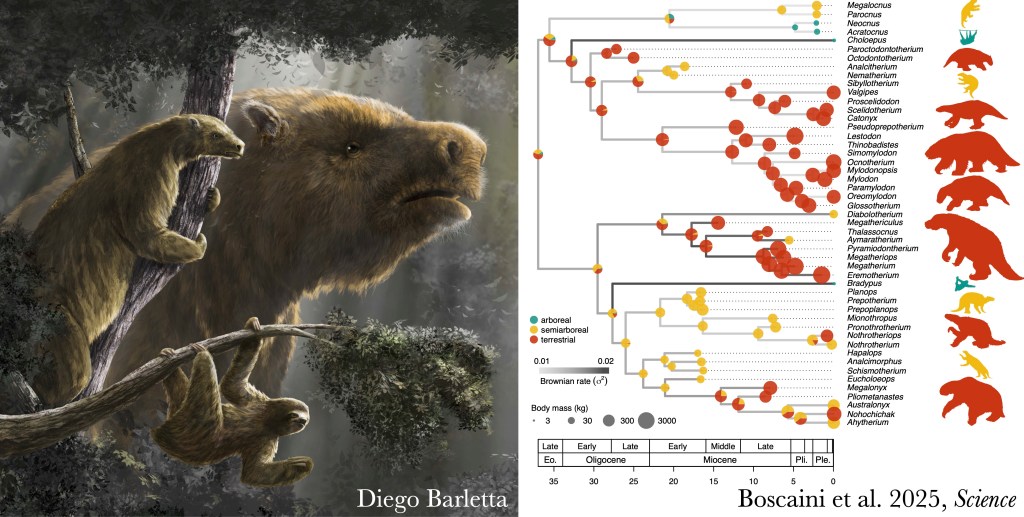
Analyzing the evolutionary dynamics of a large mammalian clade offers the unique opportunity to elucidate evolutionary patterns that occurred in the deep past. In recent years, we investigated the morphological disparity and the evolution of body size in the sloth lineage, shedding light on the tempo and mode of major transitions in their lifestyle (Casali et al. 2023; Boscaini et al. 2025).
Vertebrate paleontology of the Andean highlands
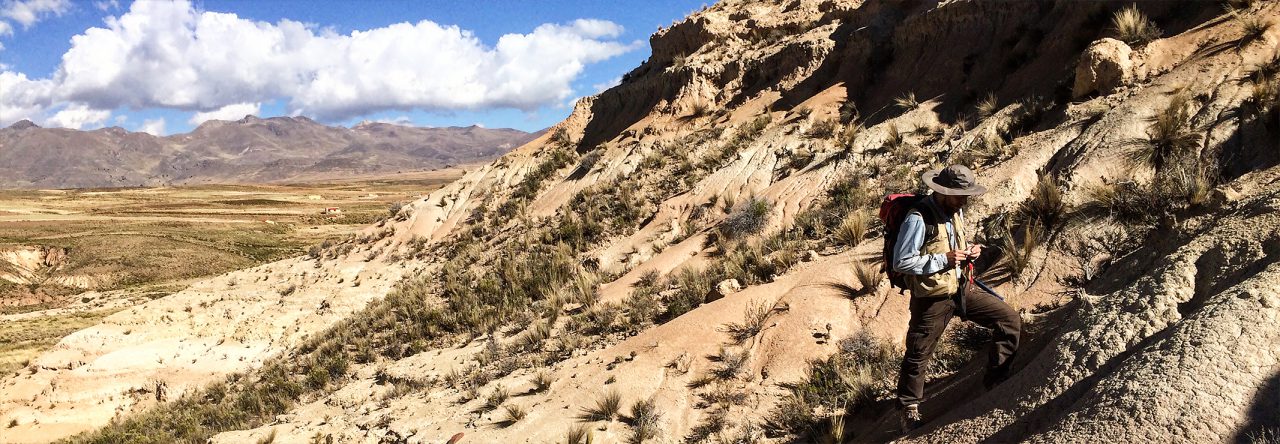
I conduct field activities in the Bolivian Altiplano with an international team of paleontologists, mainly from MNHN-Bol of La Paz (Bolivia), CONICET (Argentina), and ISEM-Montpellier (France). We investigate the turnover dynamics of the past faunas. Among the outcomes of this research line are novel insights into the anatomy and phylogeny of extinct vertebrates (e.g., Boscaini et al. 2021; Gaudin et al. 2023; Gómez et al. 2024) and their paleobiology (e.g., Boscaini et al. 2019).
Xenarthra under X-rays
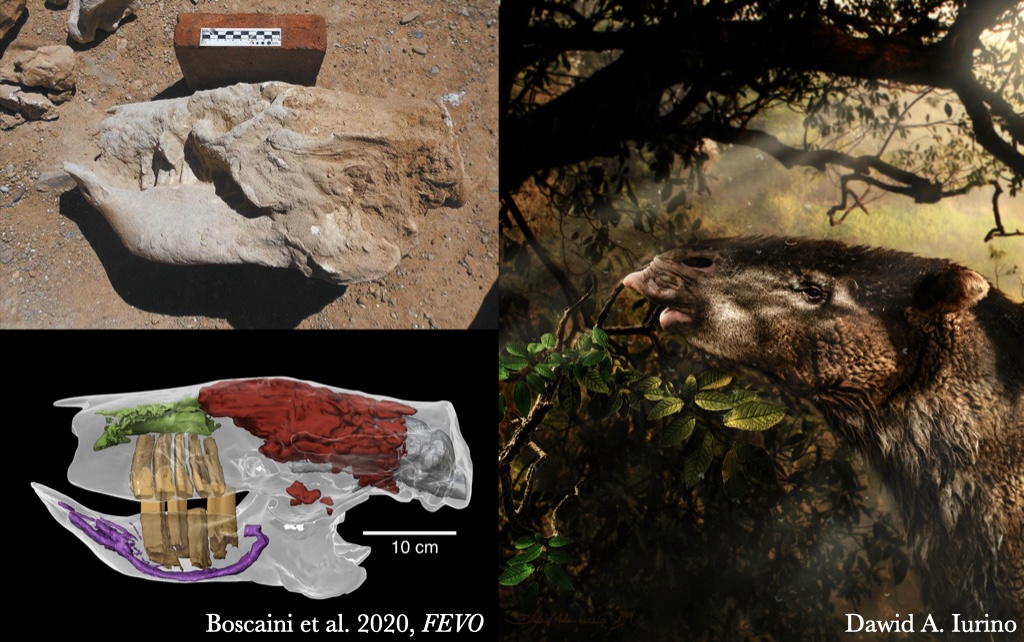
Modern computed tomography techniques and digital reconstruction applied to cranial remains allow access to and the recovery of detailed morphologies through noninvasive and nondestructive methods. Using these methodologies, we investigate anatomical regions such as the brain endocast, inner ear, and pneumatization of extant and extinct xenarthrans, recovering crucial information to elucidate the phylogeny and modes of life of the extinct xenarthrans (e.g., Boscaini et al. 2018, 2020; Troyelli et al. 2023).
Anatomy, taxonomy, and phylogeny of South American extinct sloths
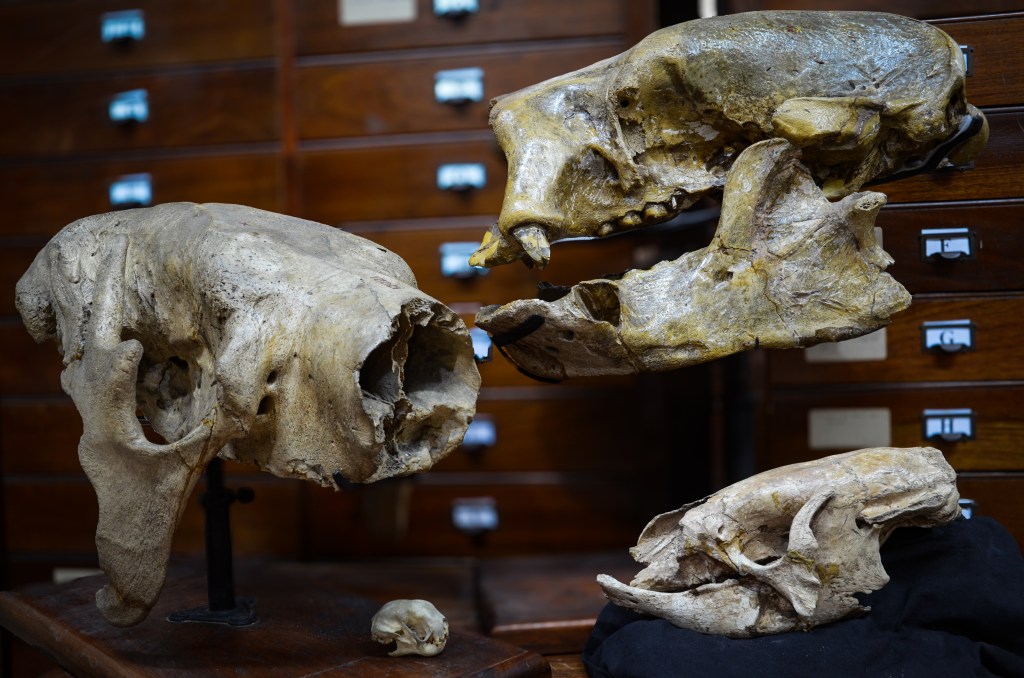
Ground sloths are some of the most fascinating extinct mammals. They originated and evolved in South America, where fossiliferous deposits continuously provide fossil evidence of new, peculiar forms. I investigate their anatomy, taxonomy, and phylogenetic relationships with an international team of renowned specialists, aiming to elucidate their evolutionary history (e.g., Cartelle et al. 2019; De Iuliis et al. 2020; Gaudin et al. 2020; Boscaini et al. 2022).
 abpaleo